

Vilas
Hand-stitched Kolhapuri chappals
As we move forward, the number of traditional artisans is declining. But we have preserved this art because it is our pride.
The short version
In his words
I have been working in this trade since 2001. When I was in the 10th grade, our family faced severe financial hardship, so I entered the craft out of necessity. As a child, I grew up watching my grandfather work with leather, and that is where my passion began. Even though my father didn’t continue the trade, I felt a deep responsibility to preserve our cultural heritage. I spent six years mastering every detail of the process before launching my own independent business in 2007.
My defining moment came in 2003. After spending two years learning, I stayed up in the shop from midnight until four in the morning for several nights to craft my first complete shoe. When I showed it to my mentor—my mama (maternal uncle)—he praised the craftsmanship. That very afternoon, the shoe was sold to a customer. That gave me the confidence that I could master and carry this traditional art forward.
Living and working at Wadinge Phata in Kolhapur hasn’t been easy. In 2019, catastrophic floods submerged our workshop, causing ₹4 to ₹5 lakh in sudden losses. Just as we were recovering, the 2021 floods hit and destroyed the shop all over again. People around us often offer negative predictions, telling you that taking a risk will lead to failure. But I tell myself: ‘Whatever happened in the past, leave it there. Keep your confidence and take the next step forward.’
Throughout both floods, my wife stood as my constant pillar—the one steady anchor I could lean on while rebuilding the workshop from scratch each time.
Visited and filmed, August 2026
The workshop, the work and the paperwork were recorded on camera that day. This is a record of one visit, not a promise about every day since.
The craftsmanship and health benefits
100% hand-stitched (no machine glue). Mass-produced factory sandals rely on cheap adhesives that peel off when exposed to water or wear. Genuine Kolhapuri chappals feature dual-sided hand stitching using heavy thread that anchors the sole.
3-layer veni braid. A delicate, multi-strand leather braid woven entirely by hand that factory machines cannot replicate.
100% Gavran (local) leather. Made from locally prepared, untreated raw hides rather than industrially processed leather.
Natural ‘Ayurvedic’ footwear. Because the leather is prepared naturally by hand, it acts as a heat sink that absorbs body heat, keeping feet cool even in 45°C summer weather.
Care and maintenance. Maintaining a pair is simple: oiling or applying polish every 8–10 days restores the shine like ironing a shirt, extending its life to 2–5 years.
Pricing and value
Unlike machine-made footwear, every pair is priced based on direct input costs and human labor hours.
Base cost breakdown. Raw materials (₹300) + hand labor (₹300) + artisan margin (₹100) = ₹700 base cost.
Intricate models (₹2,000 to ₹5,000). Premium designs command higher prices because preparing the raw leather hides by hand alone takes 15 to 20 days before fitting and intricate hand-braiding begin.
Building for the next generation
Right now, my children are focused on their school education. While their ultimate career path is their own choice, I am building a solid operational foundation so that if they choose to join the business in the future, they have a strong, profitable platform to scale and take our traditional art to new heights.
At work
The camera stays on his hands: a three-layer leather braid being woven, and a chappal stitched by hand from both sides.
What he makes
 Men’s Kolhapuri Chappal (Model 6)
 Men’s Kolhapuri Chappal (Model 5)
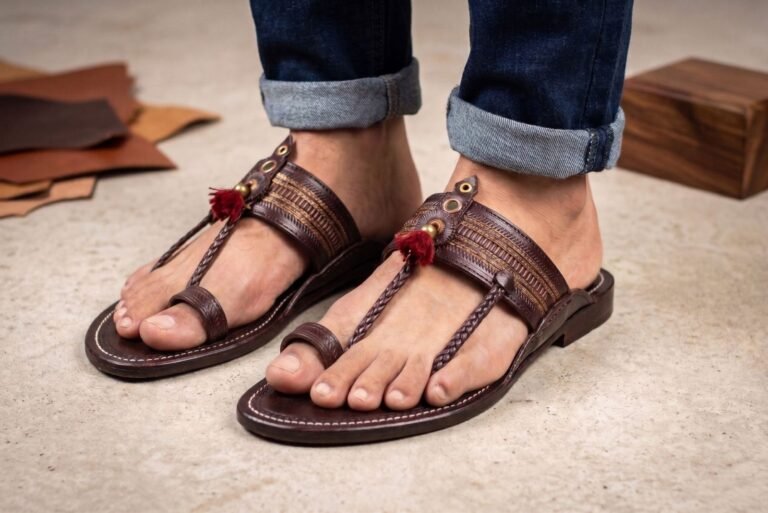 Men’s Kolhapuri Chappal (Model 3)
 Men’s Kolhapuri Chappal (Model 2)
 Men’s Kolhapuri Chappal (Model 1)
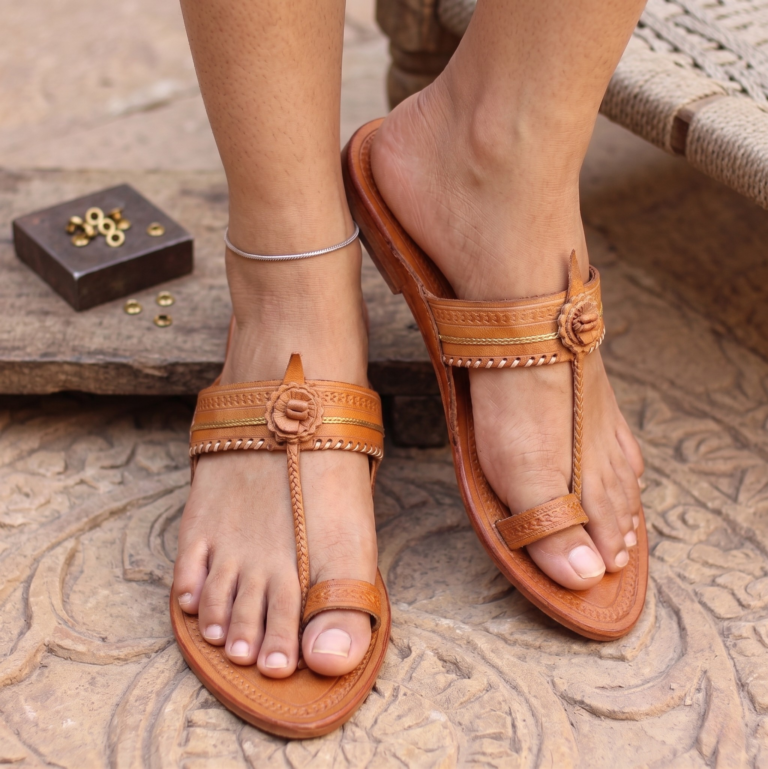 Ladies’ Kolhapuri Chappal (Model 5)
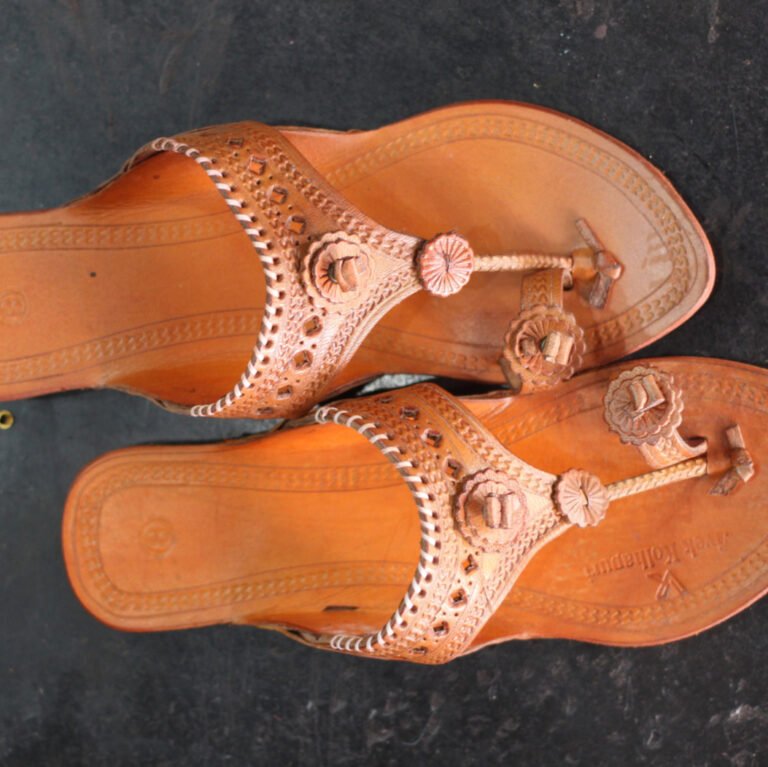 Ladies’ Kolhapuri Chappal (Model 4)
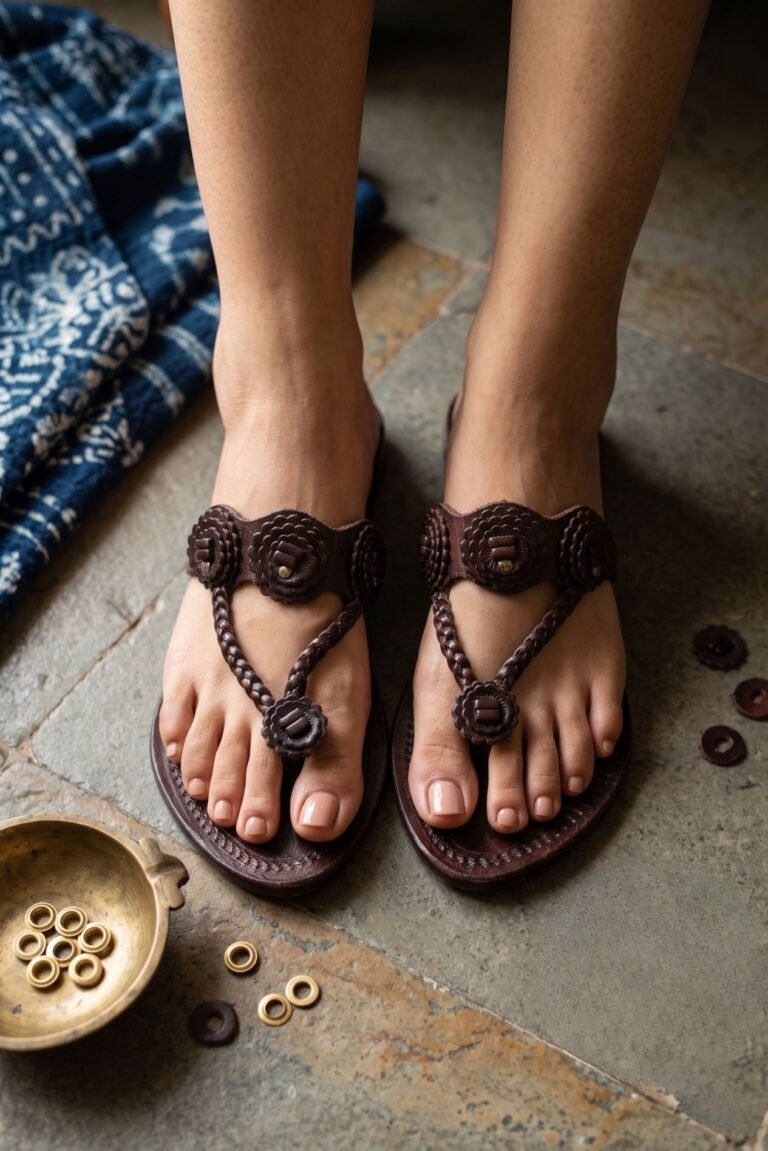 Ladies’ Kolhapuri Chappal (Model 3)
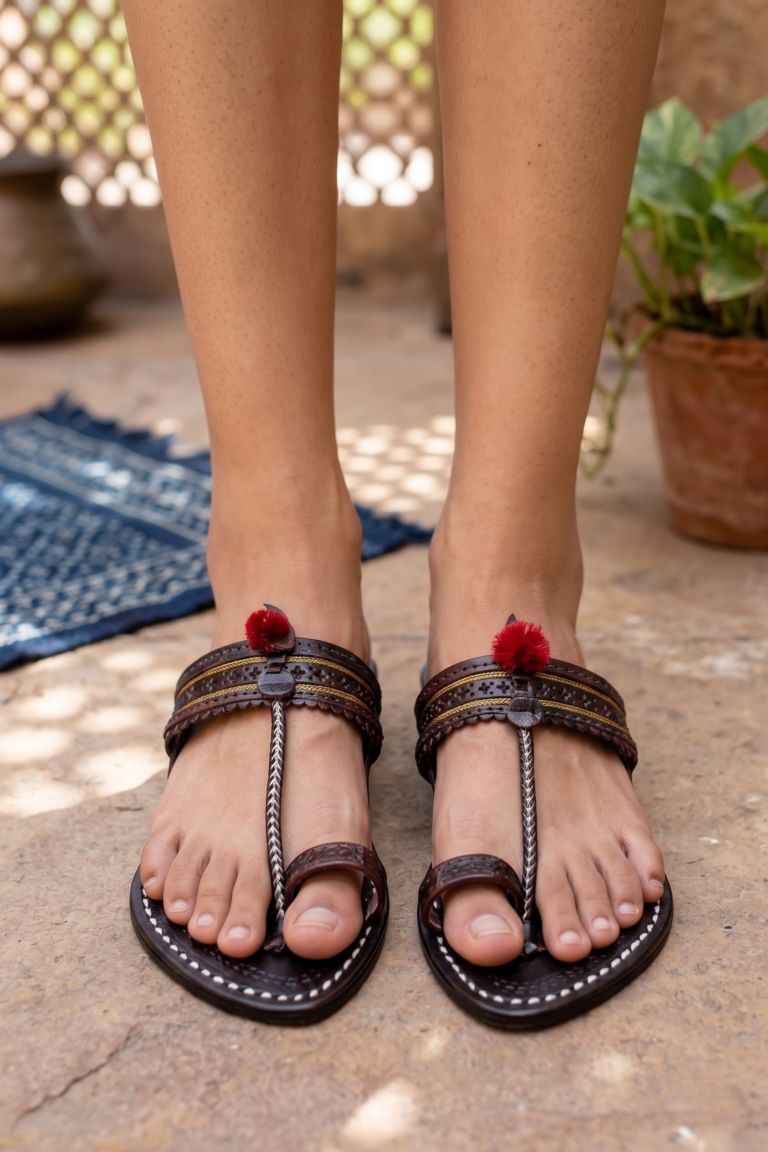 Ladies’ Kolhapuri Chappal (Model 2)
 Ladies’ Kolhapuri Chappal (Model 1)